
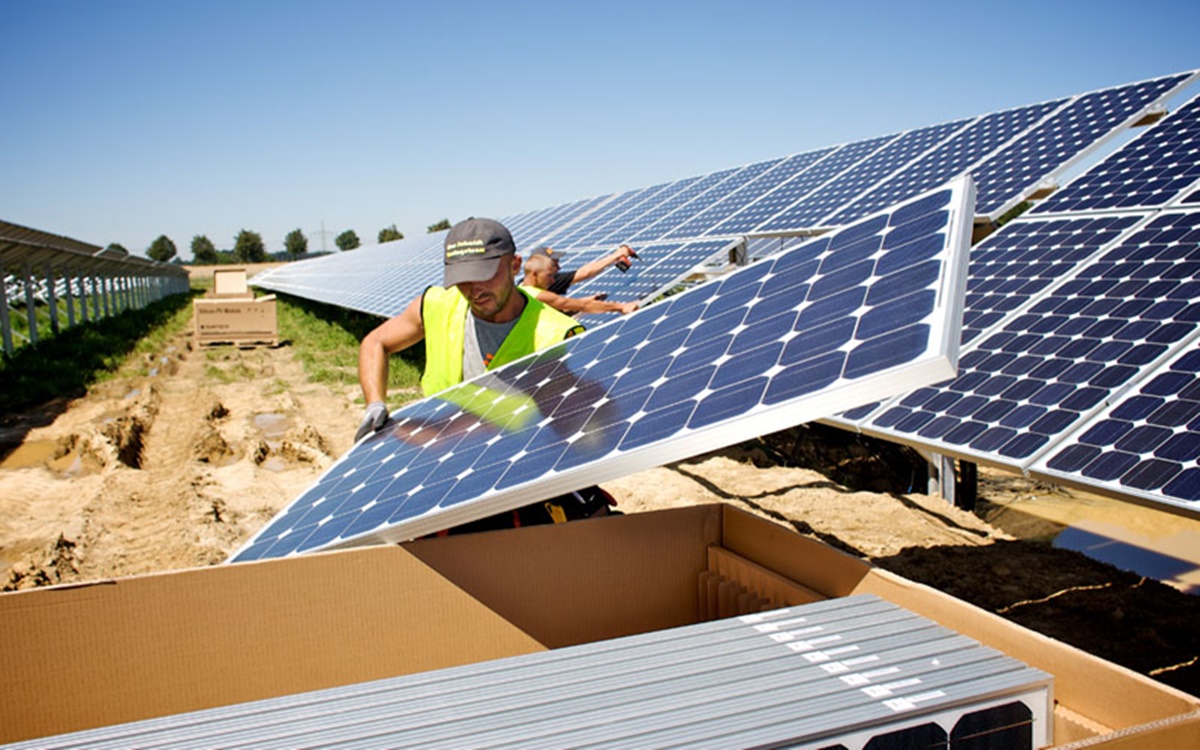
A solar inverter stands at the heart of modern renewable energy systems, transforming the direct current generated by solar panels into the alternating current that powers our homes and businesses. Yet despite its central role in the solar energy revolution, this remarkable device often goes unnoticed, quietly working behind the scenes as it helps reshape humanity’s relationship with energy. Like many technological innovations that fundamentally alter our civilisation, we tend to overlook their significance until we step back and observe the broader patterns of change.
The Evolutionary Leap in Energy Production
For roughly 200,000 years, Homo sapiens relied primarily on muscles—their own and those of domesticated animals—to perform work. The Industrial Revolution marked our species’ first major energy transition, as we harnessed the ancient sunlight stored in fossil fuels. Now, we stand at the threshold of another evolutionary leap: the direct capture of present sunlight through photovoltaic technology.
This transition is not merely technical but represents a fundamental shift in our energy paradigm:
- From centralised to distributed generation
- From finite to renewable resources
- From high-carbon to low-carbon energy systems
- From passive consumption to active prosumption
The Cognitive Heart of Solar Systems
Solar inverters function as the cognitive centre of photovoltaic systems. They perform several critical functions that extend far beyond simple DC-to-AC conversion:
- Maximum Power Point Tracking (MPPT) to optimise energy harvest under varying conditions
- Grid synchronisation to ensure compatible electricity flow
- Safety monitoring and rapid shutdown when hazards are detected
- Performance data collection and analysis
“The modern solar inverter represents one of the most sophisticated power electronics devices in widespread residential use, performing complex calculations and adjustments thousands of times per second to maximise energy yield while ensuring safety and reliability in Singapore’s tropical climate,” notes a leading Singapore solar energy researcher. Why Modern Fire Detectors Are Revolutionary Life-Savers is a useful companion read here.
The Silent Economic Revolution
The economic implications of solar inverter technology extend beyond individual savings. As with many technological revolutions throughout human history, the solar transition fundamentally alters economic power structures.
For millennia, energy production required vast capital investments and centralised control. Coal mines, oil wells, and massive power stations demanded resources beyond the reach of ordinary citizens. Solar technology, enabled by the humble inverter, has democratized energy production. Today, a homeowner in Singapore can generate electricity at costs competitive with or below retail electricity rates.
This shift represents a profound redistribution of economic power. Energy generation, once the exclusive domain of states and large corporations, now extends to millions of individuals and small businesses. Throughout history, we’ve seen how technological changes that democratize production—from the printing press to the internet—tend to reshape social hierarchies and power structures.
Adaptation in a Changing Climate
Climate adaptation represents another dimension where solar inverters play a crucial role. As extreme weather events increase in frequency and intensity, energy resilience becomes paramount. Distributed solar generation with battery storage capability, managed through advanced inverter systems, provides resilience against grid failures.
During recent tropical storms in Southeast Asia, communities with solar-plus-storage systems maintained essential services when centralised grids failed. This pattern mirrors successful adaptation strategies throughout human history—diversification and redundancy have always been key to survival in changing environments.
“Singapore’s exposure to climate risks makes inverter-based solar systems particularly valuable for resilience planning, especially as newer hybrid inverters can seamlessly manage both solar input and battery storage to create micro-grids during outages,” explains a Singapore-based energy consultant.
The Cognitive Challenge
Despite their transformative potential, solar inverters face adoption barriers that are more cognitive than technical. Humans evolved to respond to immediate, visible threats, not slow, invisible processes like climate change. Similarly, we readily understand tangible technologies like solar panels but often overlook the critical role of inverters in making those panels useful.
This cognitive bias toward the visible over the invisible, the immediate over the long-term, represents one of the greatest challenges to technological adoption throughout human history. From sanitation systems to vaccines, the most important innovations often work invisibly in the background.
The Intersection of Technology and Culture
The adoption of solar inverters also mirrors broader cultural shifts in our relationship with technology. As we move from passive consumers to active participants in energy systems, we see parallels to changes in media, communication, and information technologies. This democratisation of production reflects a deeper pattern in human technological evolution—a constant oscillation between centralisation and decentralisation, between hierarchical and networked systems.
In Singapore, this cultural shift manifests in community solar initiatives where shared inverter systems enable apartment dwellers to participate in renewable energy generation, demonstrating how technological innovation can foster new forms of social organisation and cooperation.
The Path Forward
As we look toward a future powered increasingly by renewable energy, the role of solar inverters will only grow in importance. Smart inverters that communicate with the grid, respond to pricing signals, and optimise energy flows will become the neural network of a distributed energy system.This transition reflects a broader pattern in human technological evolution—from simple tools to complex systems, from mechanical to digital, from isolated to interconnected. The history of human progress has always been about creating tools that extend our capabilities, and few modern tools offer more potential for positive change than the solar inverter.